Press on nails for small nail beds can look really good, but they are unforgiving when the fit is off. A set that looks harmless in a product photo can sit on skin at the sides, lift early, or make the fingers look visually crowded once it is actually on your hand.
That is usually the disconnect. People assume they need a prettier design or a different adhesive. Most of the time they need a better width match, a calmer shape, or details that do not eat up what is already a smaller nail surface.
Why press on nails for small nail beds are easy to shop wrong
Small nail beds do not leave much room for error. A tip that is only a little too wide looks obvious faster on a petite nail plate than it does on a broader one. You notice the sidewall overlap. You feel the edge against skin. Sometimes the whole set starts looking wider than the finger itself.
Length can make that worse. The more taper and tip length you add, the more visual weight you add too. If the base fit is already slightly off, a long shape usually makes the problem look bigger, not smaller.
That does not mean smaller nail beds are hard to style. It means the fit work has to happen first.
Start with width before you think about length
Shape names get the attention, but width usually makes or breaks the result.
You want the press-on to sit close to the natural sidewalls without covering skin. Too wide, and the edges start pushing up or lifting early. Too narrow, and the nail can feel less stable at the sides. Neither version wears especially well.
If you keep guessing from product photos, a LuxeClaw press-on nail sizing kit is a more useful starting point than another blind order. It gives you a cleaner read on width before you spend energy comparing shapes, finishes, and art styles.
The goal is not complicated. The nail should look like it belongs there before you even start worrying about whether the design is cute enough.
Shorter shapes usually feel more balanced
This is where a lot of people finally stop fighting their manicure.
Short rounded, short square, soft square, and some short almond shapes usually look calmer on smaller nail beds than long coffin or very sharp tapered shapes. Longer styles are not impossible. They just ask for better proportions and less width error.
If longer tips always end up feeling like too much, our guide to extra short press on nails is a good next read. It helps if you want the manicure to stay polished without feeling oversized by lunchtime.
The practical side matters too. A shorter tip has less leverage, catches less, and usually feels more normal during a real day.
Detail scale matters as much as shape
Small nail beds usually look better when the design has room to breathe. That can mean micro-French edges, soft pinks, milky neutrals, slim chrome lines, or lower-profile pearl accents instead of thick 3D clusters stacked across every nail.
That is why cleaner sets often read better than busier ones. A lower-profile design with readable borders still feels styled, but it does not swallow the whole nail. On a small surface, that difference shows.
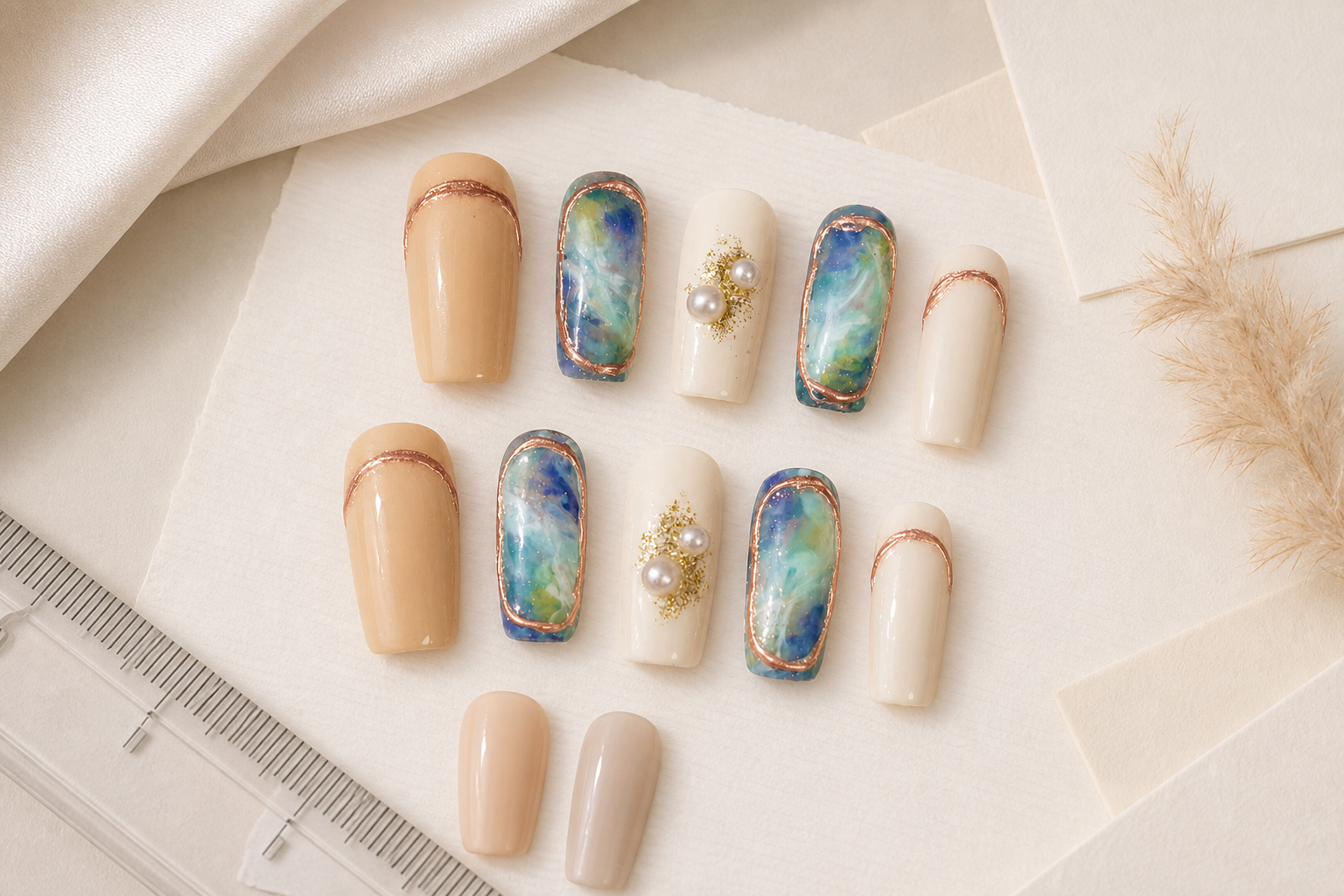
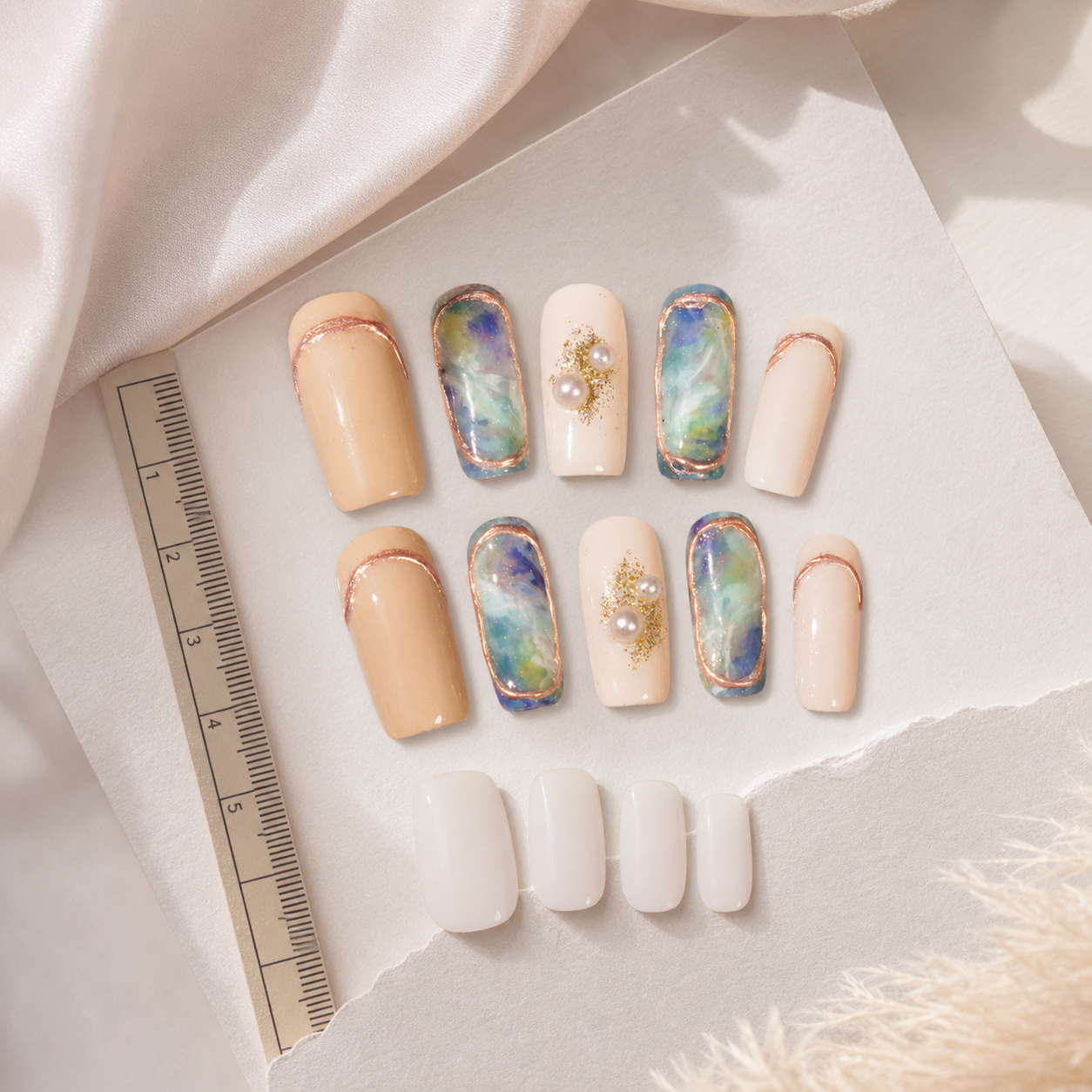
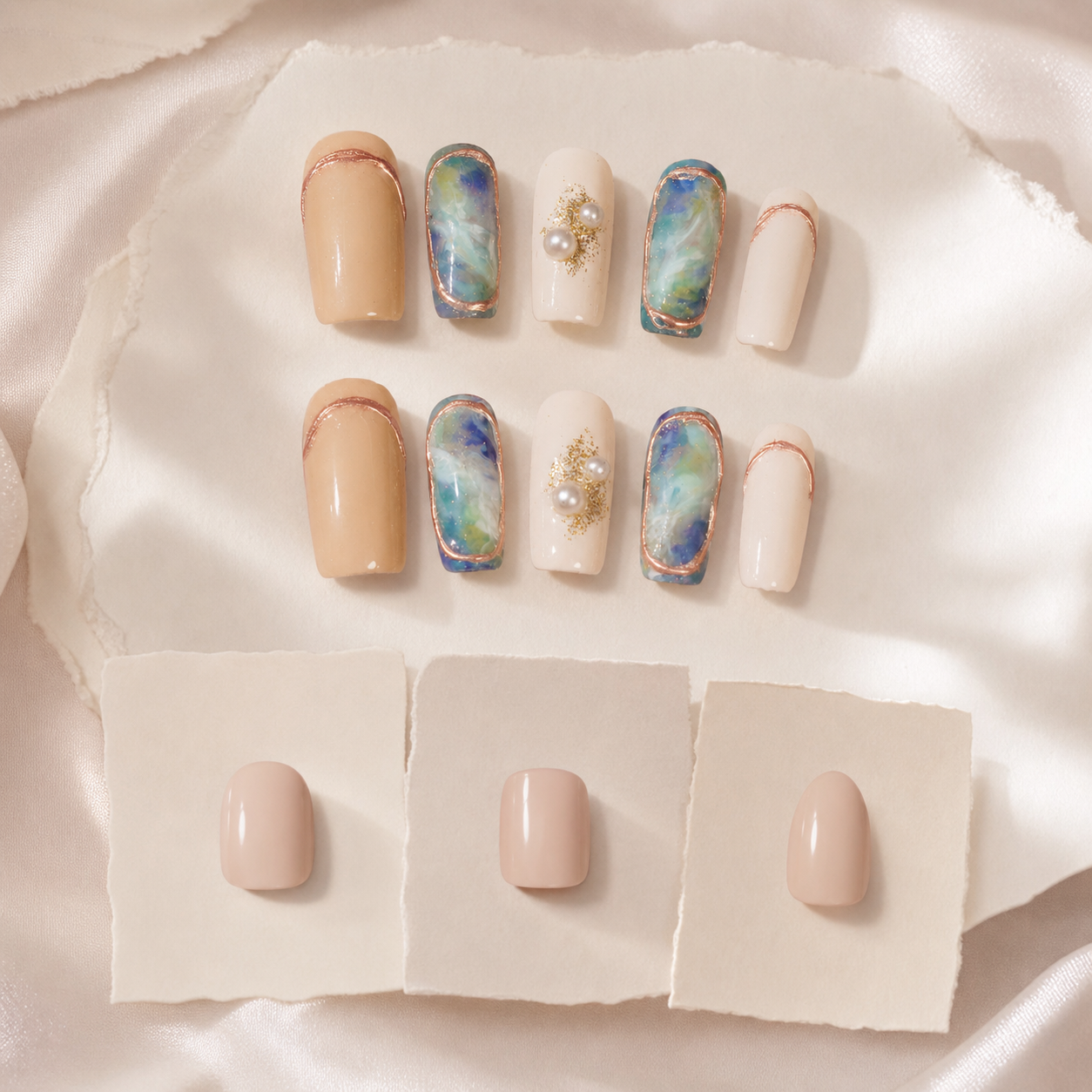
You can see it in real product styling too. A set like Magical Granite Elegance still has visible detail, pearl accents, and framed marbled panels, but the decoration sits flatter and reads more clearly than a set built around oversized bows or bulky charms. Smaller nail beds usually benefit from that kind of control.
Use tabs for a trial run when you are unsure
If you are between shapes or you are not sure whether a style feels too wide, tabs can help as a test wear. They are not the longest-wear option, but they let you check sidewall fit, scale, and day-to-day comfort before you commit more firmly with glue.
Our guide to press on nails with adhesive tabs explains when that makes sense and what kind of wear time to expect.
This tip is especially useful if your nail beds are small but not perfectly symmetrical. A set can look right in one hand-held photo and feel different once both hands are moving through a normal day.
What usually overwhelms smaller nail beds
The same mistakes show up over and over:
- choosing a cuticle curve that is obviously wider than the natural nail
- jumping straight to very long tapered shapes before the width is confirmed
- picking heavy 3D clusters on multiple nails when the base area is already small
- using thick side details that crowd the edge line
- assuming that more decoration will make a petite set look more luxurious
Usually the opposite happens. Better editing looks more intentional.
A quick checklist before you order
- Measure width before trusting the product photo.
- If you are between two looks, test the calmer one first.
- Keep the shape shorter if long tips usually feel visually heavy on you.
- Choose details that sit low and leave some open space.
- Re-check width before blaming the adhesive for every lifting edge.
Press on nails for small nail beds usually look best when the width is right, the shape stays under control, and the design is scaled to the nail instead of fighting it. Once the base fit makes sense, the rest of the choices get much easier.